Scaling Smarter: 5 Lessons Learned from our expert Panel
Robert Johnson review of his panel at WAW-CPH 24 Sept 2025
Featured talk at

24 September 2025
At Web Analytics Wednesday in Copenhagen, I had the chance to moderate a panel with three strong voices in the field: Astrid Illum, Product Leader at TV2 Denmark, Martin Madsen, Global Analytics & Measurement Officer at UNHCR, and Rasmus Harsaae, Business Analyst at Pandora. Together, we explored what it really means to make it work, make it better, make it bigger.
Scaling is a word everyone uses, but it means something different depending on your vantage point. For product leaders, it is about features and vision. For architects, it is infrastructure and technical debt. For analysts, it is about delivering insight at speed.

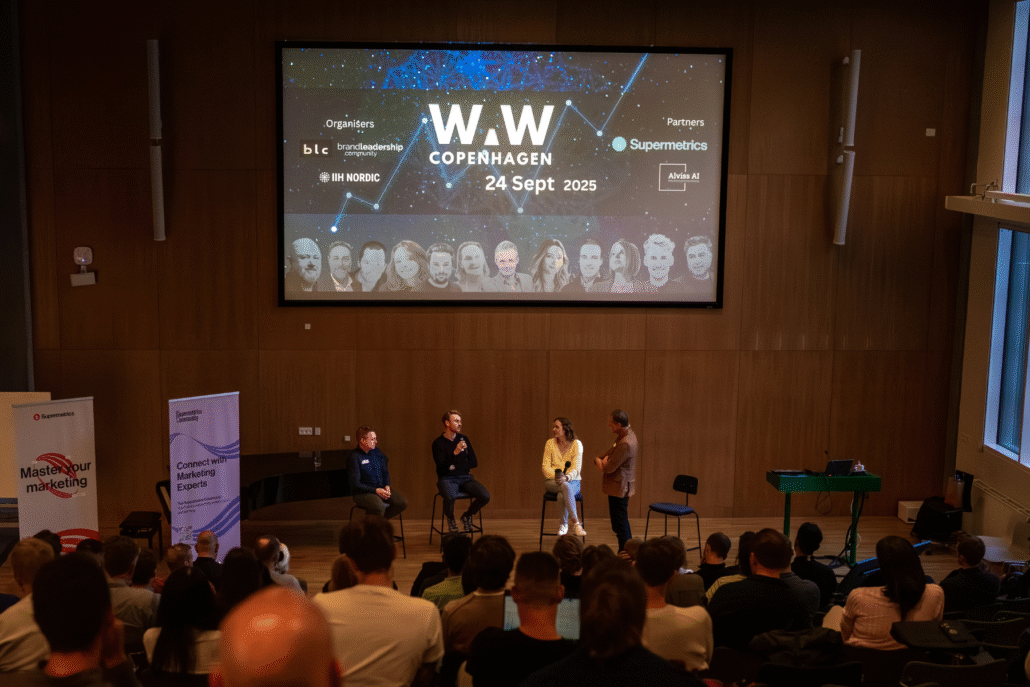
Here are the top 5 lessons that stood out for brands, martech, ecommerce, and analytics leaders.
1. Scaling means balancing speed and technical debt
The fastest route is rarely the most sustainable. Martin described the choice as “scaling with debt or without debt.” Rasmus gave a simple example. A one-off Excel sheet might solve a problem quickly, but it soon becomes the cornerstone of analysis and a burden to maintain.
The lesson is that speed always comes at a cost. Leaders need to decide carefully when a shortcut is worth the friction it creates later.
2. Simplification as the ultimate scaling strategy
At some point, scaling is no longer about building more dashboards, processes, or integrations. It is about cutting things back.
Rasmus urged companies to simplify when patchwork systems start to pile up. I reflected this back to him during the panel, and he noted that simplification reduces not only breakdowns but also the strain on the people who maintain the processes.
Scaling smarter often means removing complexity rather than adding more.
3. Value is more than revenue
Revenue matters, but it is not the only measure of value.
Astrid described value as unlocking the next step in a company’s journey. Each new capability should open up future possibilities, not just deliver a short-term win. Martin tied value to customer satisfaction. The experience must improve even if the impact is not directly monetary. Rasmus added that customers may not see the mechanics of data activation, but they should feel the benefit.
For brands and ecommerce leaders, the reminder is clear. Value is measured in customer impact and organizational readiness as much as in sales.
The brand story is similar. What began as a simple connector (famously born from a plugin contest and a Google T-shirt) became a global data backbone, expanding from Google Sheets to Looker Studio and into modern data platforms (Snowflake, BigQuery, S3/Azure). Today, the thesis is bigger: ‘Connect → Manage → Analyze → Activate’, with customers building on Supermetrics APIs and, increasingly, activating data across paid and owned channels.
4. Failures and lessons learned
Some of the most important insights came when the panelists reflected on failures.
- Assumptions kill projects. Rasmus pointed out that teams fail when they assume what users want without involving them deeply.
- Crossing the “creep factor.” Martin shared that personalization can backfire when it feels intrusive.
- Forgetting organizational readiness. Astrid stressed that even good use cases will stall if the company lacks frameworks and processes.
These stories made one thing clear. Scaling fails more often because of human missteps than because of technology.
5. Scaling people is harder than scaling technology
The panel ended with a reminder that relationships, not systems, are the toughest element to scale.
Astrid emphasized that company processes, competencies, and structures must move in step with technical projects. Rasmus used a sailing metaphor to explain that teams scale faster when everyone knows what to expect from each other. Martin highlighted the importance of empathy. The best way to address mistakes is not with a critical email but with better documentation and conversation.
Trust is the hidden infrastructure that makes scaling possible.
Top 5 Lessons on Scaling Smarter
- Be intentional about technical debt. Shortcuts may deliver quickly but create problems later.
- Simplify relentlessly. Growth comes from removing friction, not from adding layers of complexity.
- Define value broadly. Include customer experience and organizational readiness alongside revenue.
- Learn from failures. Involve users early, avoid intrusive personalization, and prepare the organization before scaling.
- Scale trust, not just technology. Clear expectations and empathy help people move together.
Closing Reflection
Moderating this panel reminded me that scaling smarter is never solved by a single perspective. It takes leadership vision, technical knowledge, and analytical integrity working together.
What stood out is how similar the lessons were across different roles. Whether you lead products, build systems, or analyze data, the same truths apply. Go too fast and you build debt. Add too much and you lose focus. Forget people and you lose momentum.
Scaling smarter is about discipline and choice. What to simplify. What to measure. What to stop. And above all, how to align people so that progress sticks.