The Next Competitive Advantage in MarTech Isn’t Technology. It’s Community.
As marketing technology becomes increasingly sophisticated, vendors face a fundamental strategic question: Is their long-term value determined by the software they sell, or by the relationships and communities they build around it?
By Brand Leadership Community
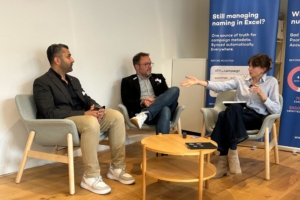
Pictured from the Brand Experience Materminds panel talk with Matz, Matthew and Julianna
The marketing technology industry has spent much of the past decade competing on innovation. More features, greater automation, deeper integrations and, increasingly, artificial intelligence have become the foundations of competitive differentiation.
Yet an uncomfortable question remains: Are customers actually extracting the value these technologies promise?
For many organisations, the answer is complicated.
Businesses continue investing in sophisticated platforms while struggling with adoption, internal capabilities, implementation and organisational alignment. Meanwhile, vendors face growing competition, rising expectations and constant pressure to acquire new customers.
Perhaps the next stage of MarTech maturity requires a different competitive strategy, one built not simply around technology, but around people.
This was a central theme in a recent Brand Connect webcast, where Jomar Reyes of Brand Leadership Community and Matthew Niederberger of MarTech Therapy explored the changing relationships between technology vendors, brands and agencies as the industry prepares for 2027.
Their discussion raised an important proposition: The technology vendors best positioned for long-term success may be those that move beyond selling software to becoming active participants in their customers’ professional communities.
Watch the full webcast with Jomar Reyes featuring Matthew Niederberger.
The problem with selling technology and moving on
Traditional software sales models place considerable emphasis on customer acquisition.
Vendors invest in lead generation, sales teams, industry conferences, demonstrations and proof-of-concept projects to secure new business.
During these early stages, prospective customers frequently receive substantial attention. Technical specialists are available, questions are answered quickly, and significant resources are committed to demonstrating value.
But what happens after implementation?
Niederberger described a familiar pattern from his experience working with technology implementations. Once the platform is operational and the initial project is completed, active vendor involvement can diminish significantly.
“That’s usually where it stops,” he observed.
The problem is that successful implementation is not the same as successful adoption.
A platform may be technically functional while users remain unfamiliar with its capabilities. Teams change, business priorities evolve and new requirements emerge. Without continued engagement, the gap between purchased functionality and realised value can grow.
For vendors, this represents more than a customer-service problem. It is a missed strategic opportunity.
Every underutilised capability represents potential value that the customer has yet to experience.
And every customer struggling independently represents an opportunity for a stronger relationship.
From customer acquisition to customer development
During the webcast, Reyes challenged the industry’s emphasis on closing new deals.
He argued that vendors should place greater importance on the ongoing relationship and the value customers continue receiving throughout their subscription.
His perspective was captured in a provocative observation: “the real sale is every month”.
The underlying principle is straightforward: A customer’s decision to continue using a product should reflect genuine confidence in its value, not simply the administrative continuation of a contract.
This suggests a shift from measuring commercial success primarily through acquisition towards a broader understanding of customer development.
Instead of focusing exclusively on new subscriptions, vendors could place greater emphasis on product utilisation, practitioner confidence, customer advocacy and meaningful engagement.
These factors may ultimately contribute to stronger retention, greater expansion opportunities and more sustainable growth.
However, achieving them requires more than additional customer-success calls.
It requires creating environments in which customers can learn from one another.
Community as a strategic business capability
A practitioner community can provide something that even the most sophisticated customer-success team cannot fully replicate: the collective experience of people facing similar challenges.
Technology users rarely operate in identical environments. They work within different organisational structures, data ecosystems, regulatory constraints and levels of technical maturity.
Yet many of their challenges are remarkably similar.
How should a platform be implemented? Which features genuinely deliver value? How can internal teams be trained? What mistakes should be avoided?
These are questions that benefit from practical exchanges between peers.
A community creates opportunities for customers to share experiences, validate approaches and develop their skills beyond the boundaries of formal product documentation.
For vendors, these conversations provide another advantage: direct access to the realities of everyday product usage.
Customer feedback can inform product development, reveal unmet training needs and highlight opportunities that traditional sales processes might overlook.
Community therefore has the potential to become a bridge connecting product development, marketing, customer success and customer experience.
Its value lies not simply in engagement, but in continuous organisational learning.
What community-led vendors are doing differently
During the webcast, Reyes highlighted examples of technology companies demonstrating a more community-oriented approach.
One was Amplitude’s Wizard Bar, an initiative that creates opportunities for practitioners to engage with product expertise and explore practical challenges.
Another was Stape.io, whose approach to practitioner relationships and industry participation Reyes described positively.
His observations focused on how close relationships with users can influence product understanding and development.
Rather than treating events primarily as opportunities to capture leads, vendors can use them to listen, learn and establish credibility among practitioners.
These examples illustrate different ways of strengthening customer engagement; they do not, on their own, establish that community investment produces superior commercial performance.
Nevertheless, they point towards an important strategic distinction.
A traditional vendor might ask: How many leads did this event generate?
A community-oriented vendor might also ask: What did we learn from practitioners? Which problems can we help solve? What relationships became stronger? How can these insights improve our product?
Both commercial outcomes and community outcomes matter.
The opportunity is to connect them.
The importance of trust and genuine participation
Not every customer gathering automatically becomes a community.
A product demonstration, user conference or networking event may create useful interactions, but lasting community requires more than attendance.
It depends on trust, relevance, reciprocity and opportunities for meaningful participation.
Practitioners must feel comfortable discussing challenges without every conversation becoming a sales opportunity.
This creates an important responsibility for vendors: supporting conversations that deliver value even when the immediate commercial return is uncertain.
Reyes emphasised the importance of helping customers develop a deeper relationship with the products they use.
The aspiration is not merely customer satisfaction, but genuine enthusiasm and advocacy.
He framed the challenge as a question of how vendors can make customers fall in love with their products.
That ambition cannot be achieved through messaging alone.
It requires products that deliver value, people who listen and organisations willing to invest in relationships beyond the immediate transaction.
Independent professional communities also have an important role. They can create vendor-neutral environments where practitioners encounter different perspectives, technologies and approaches.
Vendor-specific and independent communities need not compete. They can complement one another, combining product expertise with broader professional learning.
Rethinking the measures of success
If community is to become a meaningful business capability, vendors must consider how they evaluate its contribution.
Traditional marketing metrics remain relevant, but they provide an incomplete picture.
A broader measurement approach could examine five dimensions:
- Product adoption: Are customers expanding their use of relevant capabilities?
- Customer retention: Do engaged customers demonstrate stronger long-term relationships?
- Customer advocacy: Are practitioners voluntarily recommending products and sharing experiences?
- Product intelligence: Are community insights informing meaningful improvements?
- Professional development: Are customers becoming more capable and confident through participation?
These measures should be examined carefully. Correlation between community participation and customer success does not necessarily demonstrate causation.
Nevertheless, they provide a more useful starting point than evaluating community activity solely through attendance figures or short-term pipeline generation.
The competitive advantage that technology alone cannot provide
AI is accelerating the development of marketing technology. Capabilities that once differentiated platforms may become increasingly widespread.
But while features can be replicated, trusted relationships and established professional communities take time to develop.
They depend on consistency, credibility, genuine curiosity and a willingness to create value for others.
As vendors prepare their strategies for 2027, this may be one of the industry’s most important opportunities.
Not to abandon technology innovation, but to complement it with a deeper investment in the people who determine whether that innovation succeeds.
The strategic question is no longer simply how to acquire more customers.
It is how to help existing customers become more successful, more connected and more confident in the technology they have chosen.
The next competitive advantage in MarTech may not be another feature. It may be the community that makes the technology genuinely valuable.
This article draws on a Brand Connect webcast conversation between Jomar Reyes, Brand Leadership Community, and Matthew Niederberger, MarTech Therapy. Their discussion explored the changing roles of brands, technology vendors and agencies as the marketing technology industry prepares for 2027.